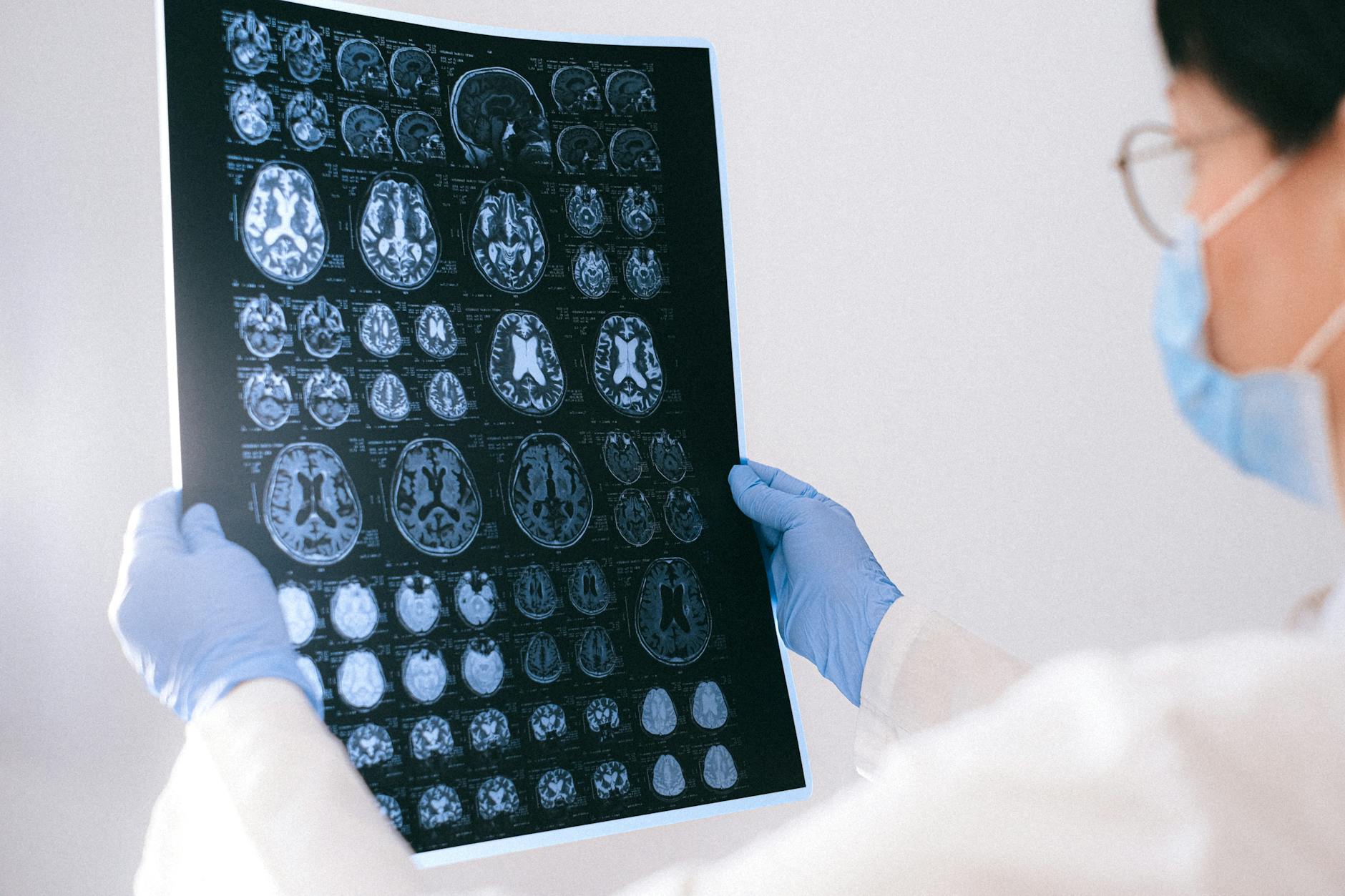

Post-mortem analysis of 91 human brain samples has revealed microplastic concentrations 7–30 times higher than in the liver or kidney tissue of the same donors, with samples collected in 2024 showing significantly higher accumulation than equivalent samples from 2016 — suggesting that brain microplastic burden is increasing in line with global plastic production, according to research published in Nature Medicine.
What Was Found
Researchers at the University of New Mexico processed brain, liver, and kidney samples from 91 donors who died between 2016 and 2024. Using pyrolysis-gas chromatography–mass spectrometry — a highly sensitive method for quantifying plastic particles — they identified and quantified microplastics and nanoplastics.
Key findings:
- Brain tissue contained a mean of 4,917 micrograms of plastic per gram of tissue — approximately 0.5% of total brain mass by weight
- Liver and kidney from the same donors contained 168 and 654 micrograms/gram respectively
- Polyethylene was the most prevalent plastic type in the brain (53%), followed by polypropylene (22%) and polystyrene (14%)
- Samples from donors who died in 2024 contained approximately 50% more plastic than equivalent 2016 samples
- Donors with dementia had 3–5× higher brain plastic concentrations than cognitively normal controls — though causality cannot be established
“These are not trace quantities — we found enough plastic to weigh. The human brain is accumulating microplastics at a rate that is measurably increasing year on year. We do not yet know what this means for health, but we urgently need to find out.”
— Dr. Matthew Campen, University of New Mexico, lead author
How Do Plastics Cross the Blood-Brain Barrier?
The blood-brain barrier (BBB) is among the most selective biological barriers in the body, designed to exclude pathogens and toxins. The study found that nano-sized plastic particles (under 200nm) appear to cross the BBB via a transcytosis mechanism — being transported across brain endothelial cells in vesicles. The preferential accumulation in brain tissue compared to liver and kidney — both organs with significant filtration roles — suggests active concentration rather than passive deposition.
Health Effects: What We Know and Don’t Know
The health implications of brain microplastic accumulation remain deeply uncertain. In cell culture and animal studies, plastic particles at high concentrations induce neuroinflammation, oxidative stress, and impaired synaptic function. The observed association with dementia in this study is hypothesis-generating, not causal.
The WHO has classified microplastic health effects as “insufficient data for conclusions” — a designation that frustrates researchers who note that we are conducting an inadvertent human experiment with no control group and no off switch.



Leave a Reply