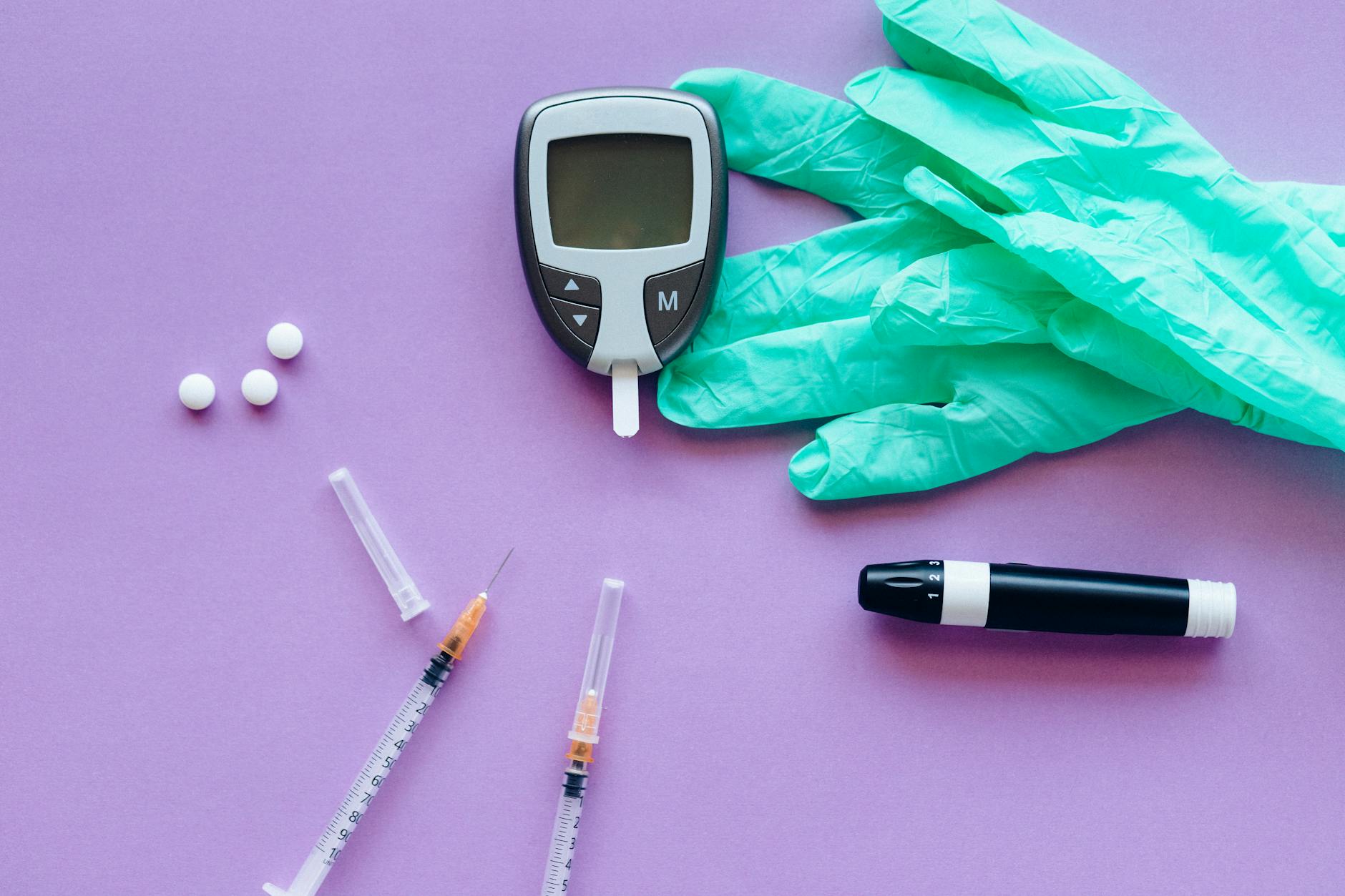

Specific patterns of blood glucose variability — detectable by wearable continuous glucose monitors worn for as little as two weeks — can predict type 2 diabetes diagnosis up to three years in advance with 84% accuracy, according to a study of 11,000 UK Biobank participants published in Nature Medicine.
Study Design
The Fenland-CGM study fitted 11,163 participants — all free of diabetes at baseline — with Abbott Libre Pro CGM devices for two weeks, then followed them for up to four years. During follow-up, 847 participants received a new type 2 diabetes diagnosis. Researchers then applied machine learning algorithms to the CGM waveform data to identify predictive patterns.
Key Predictive Signals
The algorithm identified three CGM-derived signatures that together predicted diabetes onset with 84% sensitivity and 79% specificity:
- Post-prandial glucose excursion amplitude — magnitude of blood sugar spikes after meals
- Dawn phenomenon severity — the size of the pre-waking morning glucose rise driven by cortisol and growth hormone
- Glucose time-in-range fragmentation — erratic patterns of normal glucose interrupted by brief spikes, indicating early beta-cell dysfunction
These patterns were detectable an average of 2.9 years before the HbA1c threshold that triggers a clinical diabetes diagnosis was crossed.
“HbA1c tells you what has already happened over three months. CGM shows you the dynamic behaviour of glucose regulation — the cracks in the system — long before the averages look abnormal.”
— Professor Nick Wareham, MRC Epidemiology Unit Cambridge, senior author
Implications for Prevention
Type 2 diabetes is in large part preventable through lifestyle modification — the Diabetes Prevention Program demonstrated a 58% reduction in progression from pre-diabetes to diabetes with structured exercise and dietary intervention. The problem has always been identifying at-risk individuals early enough.
Standard HbA1c screening typically identifies pre-diabetes only 1–2 years before diabetes onset — too late for the full prevention window. CGM-based prediction, by contrast, identifies risk 3 years earlier, providing a meaningful window for intensive lifestyle intervention.
Cost and Access
CGM devices for non-diabetic screening use currently cost £40–£60 per two-week sensor in the UK and ₹3,500–5,000 in India. If deployed through primary care at a population scale for high-risk individuals (obese adults, those with family history, women with prior gestational diabetes), health economic models suggest cost-effectiveness well within standard NHS thresholds.
Abbott and Dexcom have both announced intention to launch lower-cost “wellness CGM” devices targeted at diabetes prevention markets by end of 2026. The Indian market is considered a priority given the country’s 101 million people currently living with diabetes — the second highest burden globally after China.



Leave a Reply